
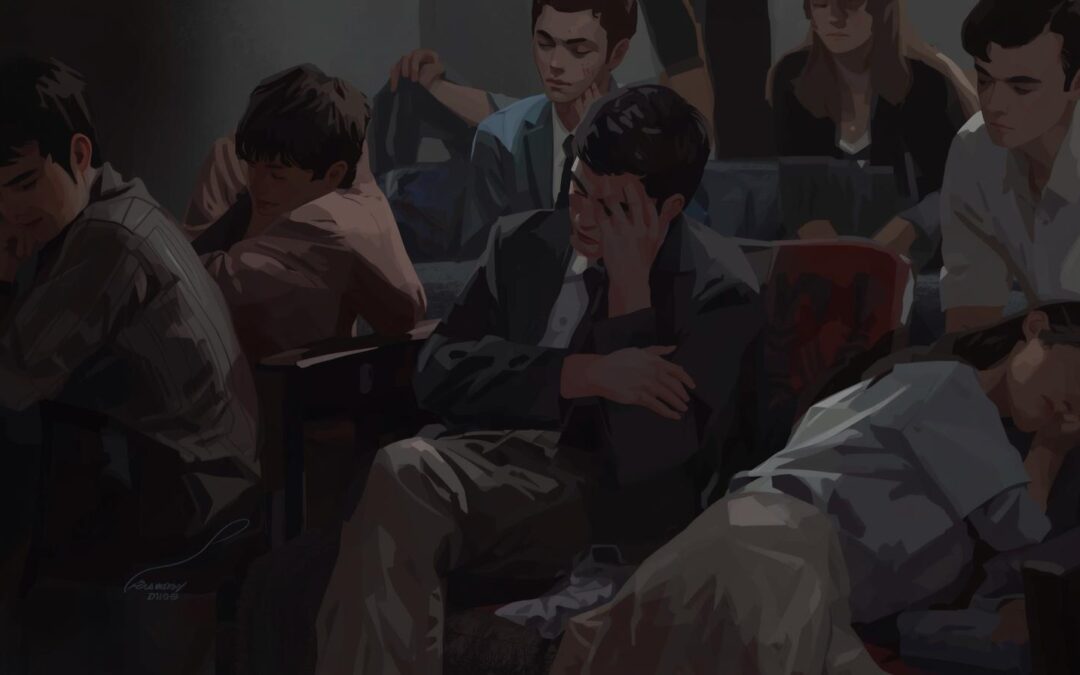
Too many communities around the world have had to deal with mass tragedies due to war, natural disasters, school shootings, transportation accidents, and other causes.
First, let me say I am so sorry for your loss to anyone who has ever had to face this overwhelming horror.
Second, I ask you to please try to have patience and understanding for yourself and other community members at this difficult and overwhelming time.
Third, I am hoping the following information may be of some use to you in the coming weeks and months.
Everyone reacts differently to grief and tragedy. There is no “right” way to grieve, there are only healthy/helpful ways to grieve and unhelpful/unhealthy ways to grieve.
The goal is to learn as many healthy ways of grieving as you can to support you through the grieving journey ahead.
It has been my experience that when multiple deaths occur together under tragic circumstances, it doesn’t just amplify grief – it multiplies it.
Entire communities can be devastated, but somehow still have to try and function – care for remaining family members, work at jobs, cook, clean, sleep.
There are no words to describe the unbelievable courage and perseverance that people show through horrific events.
So whoever you are, and wherever you are, you are probably doing better than you think.
One of the things that can make grief feel harder is that not everyone grieves the same.
Within communities, families, and couples, all people can experience the same loss, but react very differently.
It is very normal and typical for people to respond in a number of ways to a mass tragedy. Usually, people will respond with some form of the “Fight, Flight, or Freeze” natural response to threat and overwhelm:
1. Freeze – People may go into shock, a form of the “freeze” natural response – experiencing numbness, like they are stuck in a bad dream, or like a zombie going through the motions but not really present – up to and including the point of complete physical shut down where it’s impossible to get out of bed.
2. Fight – People may experience immediate overwhelming anger, sadness, rage, fear – a form of the “fight” natural response. Their body hasn’t shut down, and so they are feeling every emotion at 1,000 times intensity.
3. Flight – People may switch into “doing” – a form of the “flight” natural response. They focus all their energy on planning a community wide food drive, or funding drive, a community wide memorial celebration, they may join or start an activist group, or they may literally run away on a trip or move to a new location.
As long as a reaction isn’t destructive – hurting themselves or someone else – it is probably the right reaction for that person, right now.
The main points to remember are:
1. Learn what YOU need to grieve well, and make a plan that will work for you and your family (Do you want lots of people around? Do you want to be by yourself, or just with your family? Do you need to punch pillows and scream, or scream or cry in the shower? Do you want to plan a group memorial, or would you like a small family gathering at a later time?).
2. Kids grieve too!
We often make the mistake of thinking that children of all ages are “too young” to grieve, or that we should protect them from grief. DO protect all children from media and social media coverage of a large tragic event. Media mostly focuses on sensationalism, and this can make kids’ grief worse, and make them feel even more unsafe and unsure.
FACT – all children of all ages grieve the loss of people and pets – even babies.
FACT – children need to experience age appropriate grief. DO NOT show your children crime scene photos, even if they ask. Children understand death as a concept at the developmental age/stage they are at, and need age-appropriate comfort.
FACT – Babies and toddlers and young children will need lots of extra comfort, routines, stability, predictability. They may not be able to verbalize their grief and fear, and so they will act it out – with tantrums, nightmares, regression (needing diapers after being toilet trained), being clingy, needing constant reassurance. This is what they NEED. They are not acting out to make your life miserable – they are trying to cope with limited tools just like you are.
FACT – elementary aged, tweens, and teens may be able to talk about or draw their grief a bit. Again, they need age-appropriate information and lots of tools and tricks to express their grief – doodling, sports, funny movies, talking to a child-psychologist/play therapy, etc.
3. Try to respect what others need, even if it’s not what you need.
Invariably it seems that the person who needs quiet time and withdrawal ends up married to the person who needs to distract by planning a community wide memorial.
Know that it’s ok to need different things – everyone is just trying to cope the best they can.
Do not accept abuse, ever. However, if your wife needs to stay home and hug the kids and cry while you start a community action group, that’s ok.
Learn what each other needs and respect it.
4. It is a long road ahead, and you don’t have to travel it all today.
It is ok to focus on simply trying to get through each day. You don’t have to have it figured out just yet.
Do what you need to do to take care of yourself and your family today.
Call in friends and give them a task list, or share duties in a grief-ravaged community. – Can the mom’s do a grocery run while the dad’s watch the kids for an afternoon? Can you trade babysitting with trusted neighbours so that you have an afternoon to cry and sleep?
5. Grief evolves over time, and what you need may change too.
Over time, you may experience all different emotions, needs, and wants, fears, desires, etc.
The trick with grief is to figure out what you and your family members need to grieve in a healthy way based on what you need at the present time.
- I know that sounds a bit wishy-washy, but you will need to keep checking in with yourself and your family to understand what you need right now, and then do that thing. For a year or two.
- I wish I could tell you that grief goes away with time. It does not. Grief gets different over time, and your ability to learn new healthy coping skills is what helps you to heal over the coming months and years.
- I wish I could tell you your life will return to “normal”. It does not. Grieving well means that you understand your life is going to be different now. You can and will find ways to honour your old and new life over time.
- I can tell you that with continued effort to learn what you need, learn new skills, find supports that are right for you and your family.
- I can tell you that this is a very difficult journey to walk alone – I encourage you to reach out to grief or crisis counseling supports (and meet them to ensure they are the right fit for you), grief support groups, friends, neighbours, faith communities if that is right for you.
- Build a community of support around yourself and your family to make the journey a bit easier.
I wish you peace, healing, hope, and love.
Ruby